| USA
| USA | México
 | India
 | Canada
 | Colombia
 | Brazil

At VIAS3D, we leverage advanced simulation technologies to solve complex engineering challenges across biomechanics, medical devices, and product design. Our expertise spans nonlinear Finite Element Analysis (FEA), multibody dynamics (MBD), fatigue and durability assessment, contact and wear simulation, and patient-specific biomechanical modeling. By combining high-fidelity digital twins with physics-based simulation, we help organizations predict long-term structural behavior, optimize designs, and accelerate innovation with confidence.
Human joints are masterpieces of biological engineering, seamlessly facilitating motion while withstanding the mechanical loads of a lifetime. Daily activities such as walking, sitting, climbing stairs, and lifting apply forces that, when viewed in isolation, appear manageable for structures like the knee, hip, and spine. However, the true challenge lies in their repetitive, cumulative nature. It is estimated that the average individual takes between 4,000 to 6,000 steps per day, translating to millions of loading cycles per year on the lower limb joints alone. This persistent mechanical microenvironment within articular cartilage, subchondral bone, and ligaments is a primary driver of gradual tissue remodeling, wear, and ultimately, degenerative pathologies like osteoarthritis.
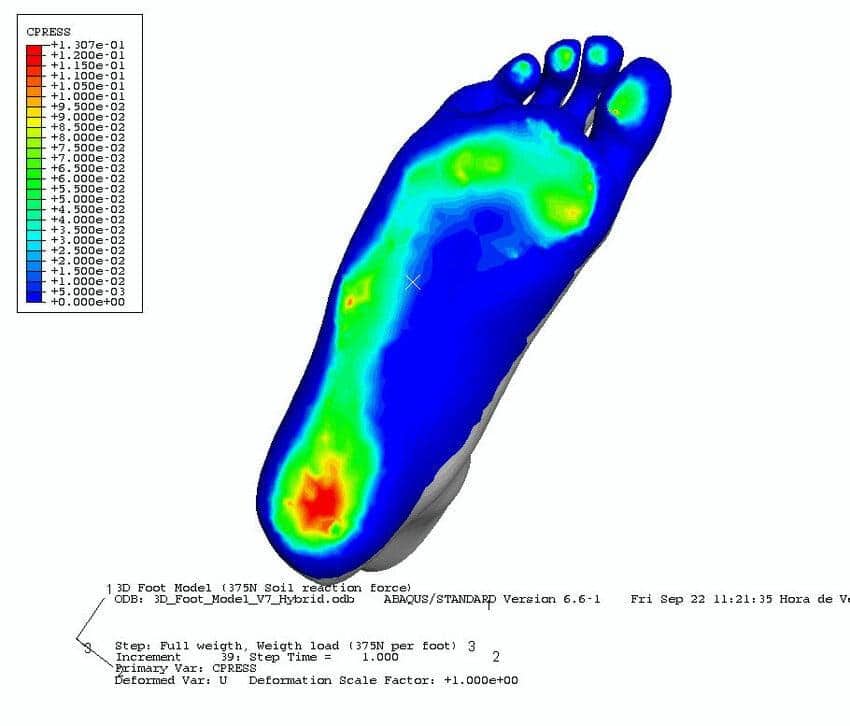
For centuries, this process was a black box. We only saw the symptoms, such as wear, tear, and arthritis, after it was too late. But today, the technology revolution has changed the situation. By using advanced computational simulations, we can now peer inside our joints as they bear the cumulative burden of a lifetime. We can watch, in stunning detail, how stress spreads like a silent web through cartilage, how bone subtly remodels under strain, and how today’s posture dictates tomorrow’s pain. The computational biomechanics, particularly the Finite Element Method (FEM), has revolutionized our understanding. By creating high-fidelity digital twins of human joints, researchers can simulate years of activity in silico, probing the micromechanical environment that dictates long-term health or disease.
Advanced Capabilities
- Nonlinear and Time-Dependent Material Models
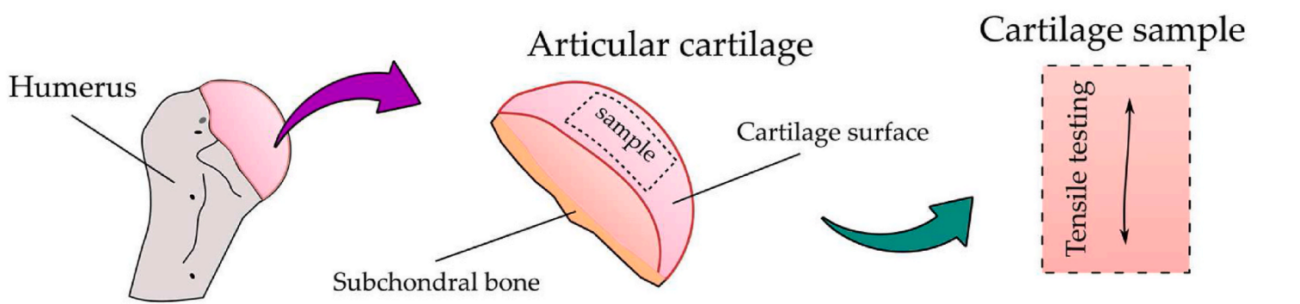
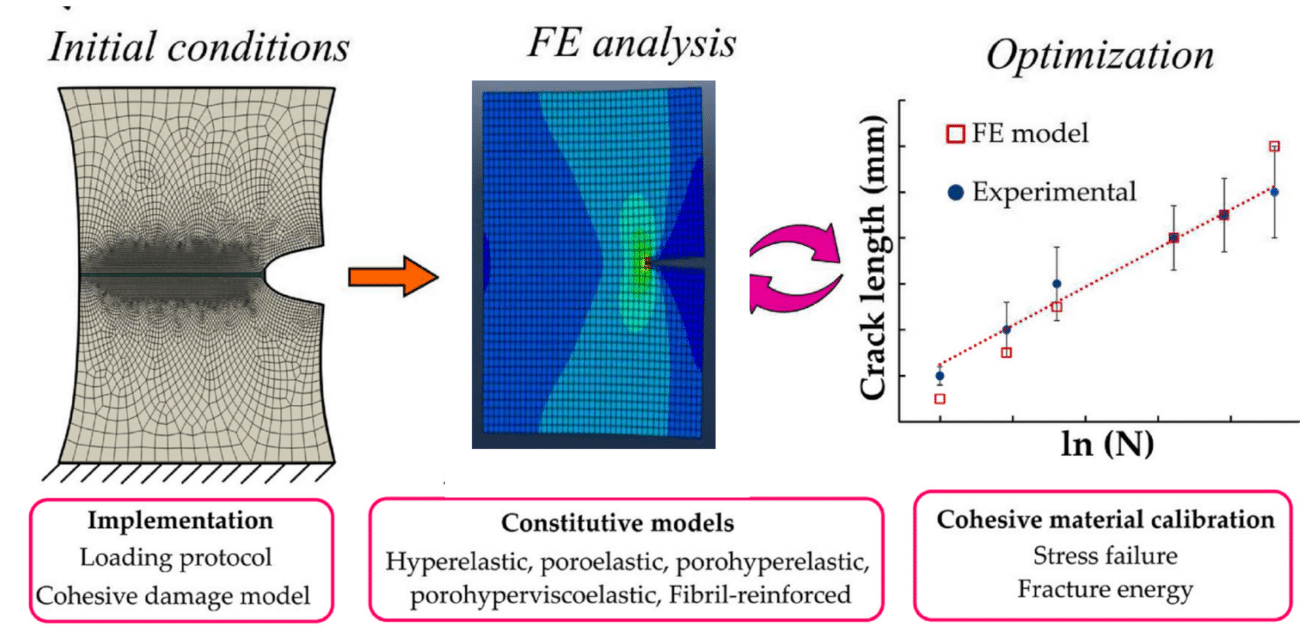
Modern FEM analysis, utilizing advanced software platforms, has transcended the limitations of basic linear elasticity by incorporating sophisticated, biologically-grounded material models. It now employs porohyperelasticity to simulate cartilage as a fluid-saturated solid, capturing the critical time-dependent behaviors of lubrication and load dissipation. For fibrous tissues like ligaments, it uses anisotropic hyperelasticity to model their directionally dependent, nonlinear response to stretching. Finally, to represent bone’s response to cumulative strain, it applies elastoplasticity and damage models that account for permanent deformation and the gradual accumulation of microcracks under repetitive overload.
- Sophisticated Contact and Wear Algorithms:
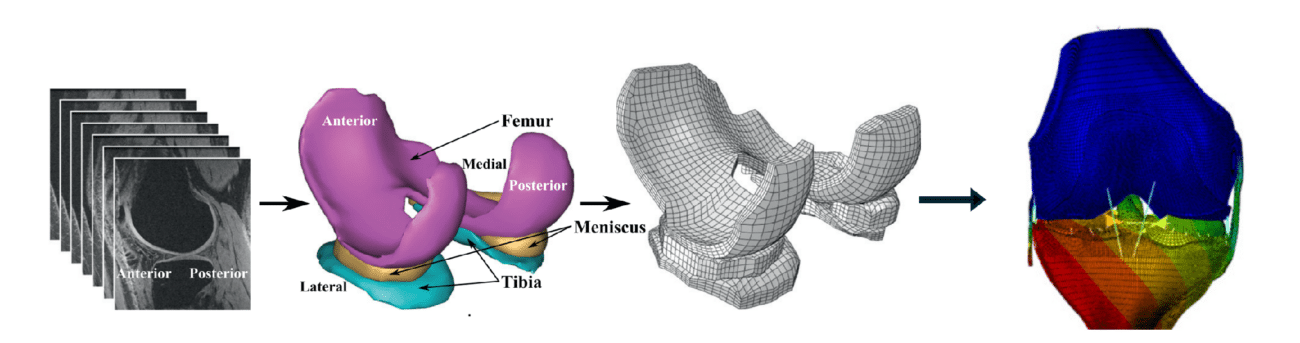
Joints are sliding-contact systems. Advanced FEM employs finite-sliding, surface-to-surface contact with mixed Lagrangian-Eulerian formulations and wear laws (e.g., Archard’s law) to model the progressive loss of articular cartilage. Patient-specific digital knee models, built from MRI data and incorporating sophisticated cartilage mechanics, can accurately forecast the specific location and progression of degeneration seen in early osteoarthritis.
- Multibody Dynamics (MBD) Coupling:
The most powerful frameworks integrate MBD for whole-body movement with detailed FEM of the target joint. This allows for simulating full activities (e.g., a gait cycle) where muscle forces, body motion, and joint contact pressures are solved concurrently.
Transformative Applications: From Insight to Intervention
- Personalized Predictive Medicine
Simulation enables a shift toward proactive, patient-specific care. Surgeons use digital models to preoperatively test procedures like osteotomies or ligament repairs, optimizing plans for long-term success. Furthermore, models can evaluate different rehabilitation exercises—comparing running to cycling, for instance—to prescribe regimens that promote healthy tissue adaptation while avoiding damaging load patterns.
- Optimized Device Design & Engineering
FEM is fundamental to developing advanced orthopaedic solutions. For implants, it simulates long-term fatigue and bone interaction, driving designs that minimize stress shielding and enhance integration. For assistive devices like braces and exoskeletons, simulation ensures they effectively offload painful joints without creating new areas of high stress, leading to safer and more effective support.
- Data-Driven Ergonomics
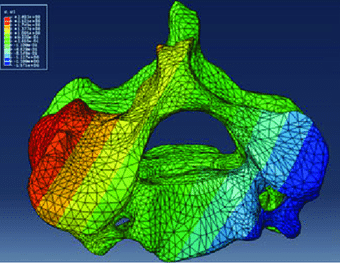
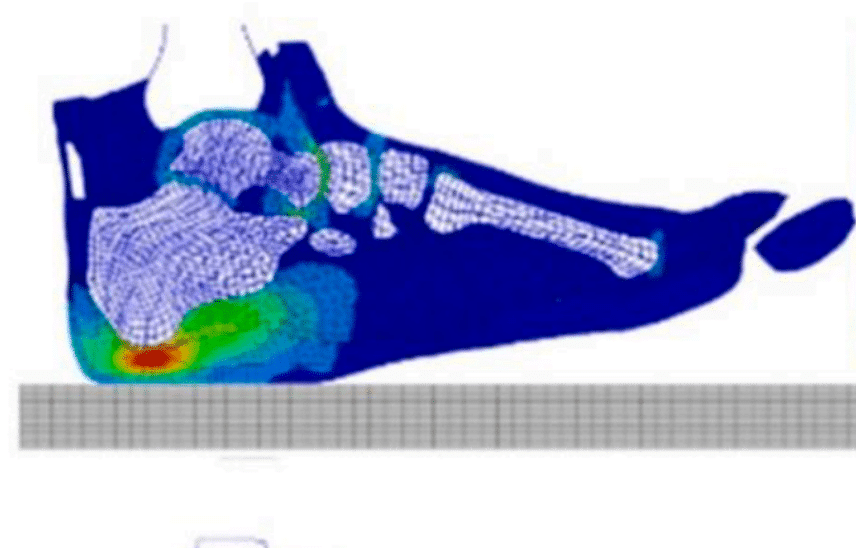
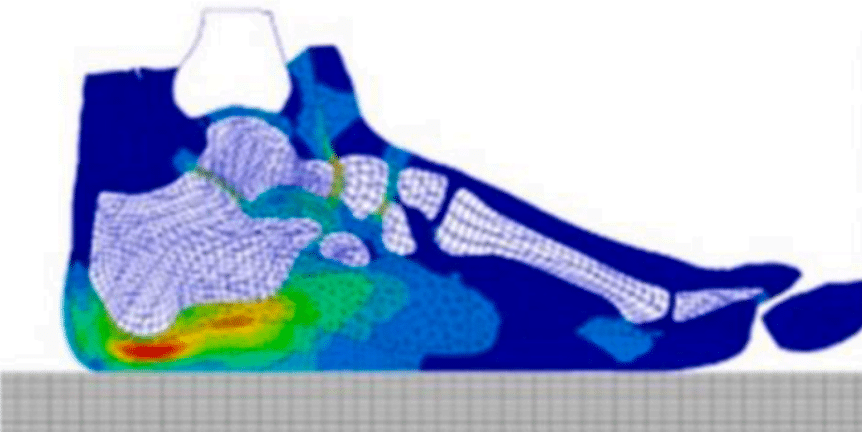
Simulation now directly informs the design of consumer products for joint health. Footwear companies use foot-ankle models to engineer midsoles that better manage impact forces, reducing cumulative stress on knees and hips. Similarly, detailed spine models allow for the evaluation of office chairs and workstations, optimizing designs to lower disc and joint pressure during prolonged sitting and combat sedentary-related pain.
Conclusion
The power to simulate the cumulative story of joint loading from a single step to a decade of wear represents a profound shift in how we approach human health and product design. It transforms a once-invisible process into a quantifiable, predictable engineering challenge. At VIAS3D, we specialize in precisely this transformation. Our expertise in advanced Finite Element Analysis is not merely about generating colourful stress contours; it’s about extracting the critical, actionable insights that drive smarter decisions. We translate the complex biomechanics of cartilage wear, bone remodelling, and dynamic contact into clear engineering parameters for:
- Medical Device Companies: Validating implant durability, optimizing orthotic designs, and accelerating regulatory submission with robust virtual evidence.
- Consumer Product Brands: Engineering ergonomic footwear, supportive seating, and wearable devices with biomechanically validated performance claims.
- Research & Clinical Teams: Building patient-specific models to explore surgical outcomes and develop data-driven treatment pathways.
By partnering with VIAS3D, you gain more than a simulation report. You gain a strategic partner with the deep technical knowledge to model the intricacies of the human body, helping you de-risk innovation, enhance product efficacy, and ultimately, create solutions that improve human mobility and comfort at a fundamental level.
📩 Contact us at: achakraborty@vias3d.com – we’d be happy to help!
Contributors:
Rajat Pal Dhangar, B.E. in Mechanical Engineering (2024), is an intern at VIAS3D and a pre-doctoral scholar in the Department of Mechanical Engineering at the Indian Institute of Technology (IIT) Kanpur.
Madhavrao Londhe, PhD, FEA Engineer, VIAS3D
He is a Mechanical Engineer with over five years of experience in Abaqus, MATLAB, and Ansys simulations. He has worked on various projects for the tire industry, focusing on development of customized simulation techniques. His expertise spans solid mechanics, linear and nonlinear FEA, sound and vibrational analysis, computational modelling, experimental techniques, and new product design and development. Additionally, he has three years of work experience in the medical equipment industry.
Arindam Chakraborty, PhD, PE, Director of Strategic Consulting at VIAS3D
He is a mechanical engineer with more than 12 years of strong academic and consulting experience in solid mechanics and design, non-linear FEA, fatigue and fracture mechanics, reliability analysis, composite structures in Oil and Gas, Nuclear, and Structural Design. He holds degrees in Civil (E), Aerospace (MTech), and Mechanical (PhD). He has a strong background in project management, business development, strategy development, and technology development, with a strong focus on public safety regulations (BSEE, NRC). Dr. Chakraborty has strong technical knowledge and working skills in CAE techniques and widely known solutions like Abaqus. He has experience in automating complex engineering problems using codes in FORTRAN/C/C#/VBA/Java/Python GUI scripts. Dr. Chakraborty has more than 25 conference and journal publications, including invited talks at industry conferences and academia. He is closely involved with ASME and API Codes C Standards committees and task groups.