 | USA
| USA | México
 | India
 | Canada
 | Colombia
 | Brazil

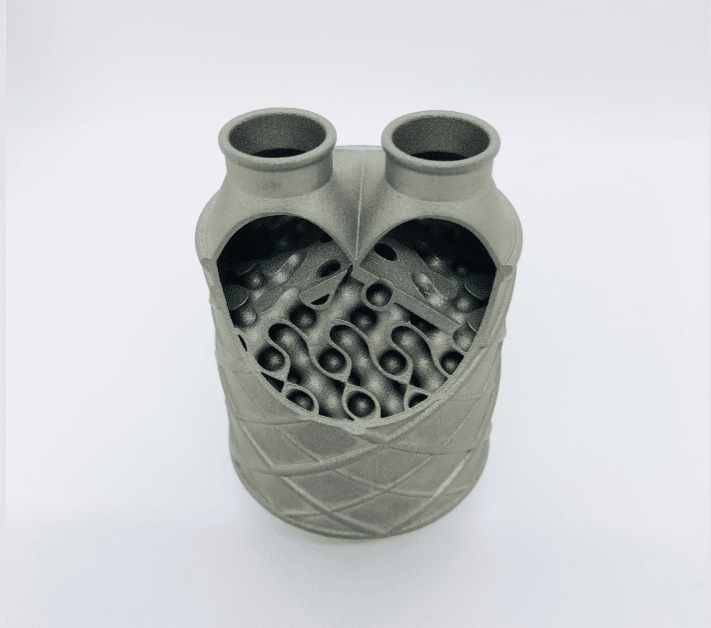
Heat exchangers play a critical role in systems where efficient thermal control is essential in various sectors such as aerospace, automotive, energy, and electronics. While conventional heat exchanger designs like shell-and-tube, plate-fin, and microchannel configurations have long been the industry standard, emerging demands for compactness, performance, and design flexibility are driving a shift toward more advanced solutions. Among these, lattice-structured heat exchangers are quickly gaining attention for their superior thermal and structural performance.
Lattice structures inherently offer a high surface area-to-volume ratio, which significantly improves thermal exchange between fluids. The geometry induces controlled turbulence within the flow, disrupting thermal boundary layers and enhancing convective heat transfer coefficients. As a result, lattice exchangers can achieve high thermal effectiveness while occupying a fraction of the space required by traditional designs.
One of the key advantages of lattice-structured designs is their ability to deliver performance in a lightweight and compact form factor. These structures minimize material usage while maintaining excellent mechanical stability, which makes them particularly suitable for weight-sensitive applications such as satellites, aircraft, and electric vehicles. Their ability to integrate into tight envelopes without compromising heat dissipation is a valuable asset for next-generation system architectures.
When coupled with topology optimization and simulation-driven design, lattice exchangers can be engineered to meet the stringent performance requirements of high-pressure, high-temperature environments such as in aerospace propulsion or high-pressure energy systems.
A well-designed lattice heat exchanger can be optimized for low pressure drop while ensuring uniform flow distribution. The geometry can be tailored to guide fluid paths efficiently, minimize recirculation zones, and maintain effective thermal gradients.
At VIAS3D, we leverage both the Lattice Designer and Fluid Dynamics Engineer (FMK) roles on the 3DEXPERIENCE platform to develop and optimize lattice-structured heat exchangers. This integrated approach allows our engineering team to seamlessly design, simulate, and validate high-performance thermal solutions tailored to each application’s needs.
Lattice Designer Roleenables engineers to generate and manipulate lattice geometries with control over unit cell type, spacing, orientation, and functional grading. The result is a highly customizable design environment that balances thermal performance, mechanical integrity, and manufacturability.
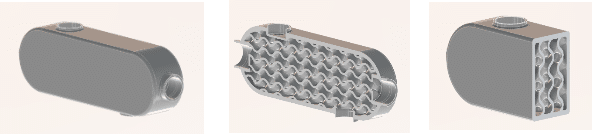
Fluid Dynamics Engineer Role (FMK)provides offers powerful computational fluid dynamics (CFD) capabilities, enabling in-depth analysis of fluid flow, pressure losses, and heat transfer in complex internal geometries. Leveraging RANS based Navier-Stokes solverwith finite volume method, it supports both steady-state and transient analyses, giving engineers the insights needed to fine-tune performance under real-world operating conditions.
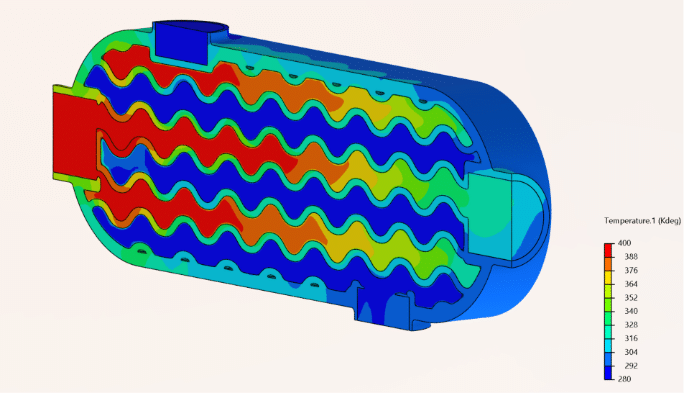
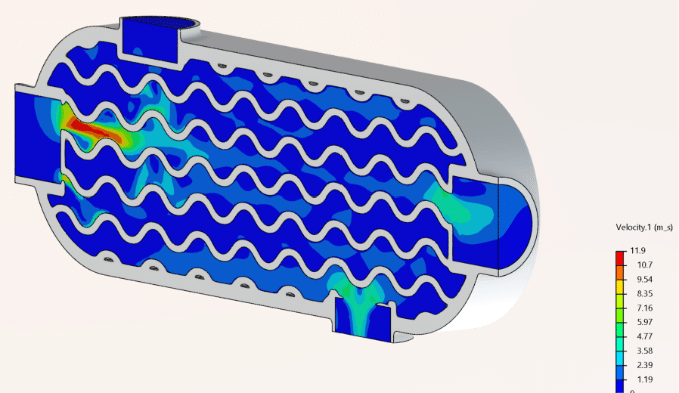
By integrating these advanced modelling and simulation tools, VIAS3D helps clients accelerate innovation in thermal management and adopt next-generation engineering workflows.
About VIAS3D
VIAS3D engineering and simulation team combines decades of analytical and design experience. They have successfully helped to design various products from many industries for strength, stability, rigidity, and fatigue endurance. Our design and analysis capabilities are accomplished through advanced engineering modelling techniques such as Finite Element Analysis (FEA), Computational Fluid Dynamics (CFD), Electromagnetics (EMAG) and other tools. Using these advanced tools, we can capture complex design features and nonlinearities arising from materials, geometry, and surface interactions to simulate designs and predict their response before they are brought in production.
For more details about our software solutions, training, engineering / PLM services or consulting needs, please email us at achakraborty@vias3D.com, mlakshmiraju@vias3D.com, info@vias3d.com or drop a message on Linkedin to https://www.linkedin.com/in/arinc16/, https://www.linkedin.com/in/murthylakshmiraju/
Contributors:
Sai Sandeep Pydisetti, Sr. CFD Engineer
Samesh Balaji, Solution Consultant, MODSIM
Gerardo Ochoa, Sr. Technical Sales Engineer
Murthy Lakshmiraju, Engineering Consulting Director